Auction Properties & e-Bidding Ease: How Digital Auctions Are Changing Homebuying in India
Auction Properties & e-Bidding Ease: How Digital Auctions Are Changing Homebuying in India

Property auctions in India have entered a new phase. What once felt complex, paperwork-heavy, and opaque has now become simpler and more buyer-friendly. With major public-sector banks releasing digital catalogues, QR-code–enabled property details, and fully online bidding systems, the auction market is becoming a serious option for homebuyers who want better deals, verified titles, and safer processes.
Banks such as Indian Overseas Bank (IOB) and Canara Bank have rolled out QR codes that link directly to property information, photographs, reserve prices, location details, and auction terms. This shift reduces friction for buyers who earlier had to call branches or visit offices to access the same information. The system is being supported by a broader push from the Reserve Bank of India and the Department of Financial Services (DFS) to modernise distressed-asset resolution and ensure fair, transparent auctions.
The rising interest in auctions also follows public calls for more secure processes after several incidents of on-ground auction-related conflict reported in states like Punjab and parts of North India. Enabling safe digital participation ensures that buyers do not face intimidation or physical hurdles during auctions. At the same time, digital systems support banks in getting better participation, improved price discovery, and faster asset recovery.
2025 is shaping up to be a turning point for how India thinks about bank-auctioned properties.
Why Auction Properties Are Becoming Popular
Homebuyers today want four things: affordability, transparency, convenience, and verified paperwork. Auction properties check all these boxes because banks sell only when the property’s documentation, title, and mortgage records are clear from their end. This reduces the uncertainty that many buyers feel in the resale or under-construction market.
Three major reasons explain why auction interest is rising:
1. Cost Advantages
Auction properties often come with reserve prices below market value. This gap exists because banks aim to recover dues rather than maximise profit. In markets with rising prices, auctions give buyers a rare chance to secure property below prevailing rates.
2. Digital Ease
QR-code catalogs, online inspection details, and e-bidding portals have changed how people approach auctions. Earlier, buyers had to interpret long legal notices in newspapers. Now, banks publish details on digital platforms such as:
– IOB e-auction portal
– Canara Bank E-Auction portal
– Government-enabled platforms like e-BKRAY
Most listings now include maps, photographs, encumbrance details, reserve price, EMD (earnest money deposit), and bid timing.
3. Safe, document-verified transactions
Since auctions happen only when banks have legal charge over the asset, the due diligence burden on the buyer is lower. While independent verification is still recommended, bank-auctioned titles are usually clearer compared to other distressed sales.
How the E-Bidding System Works
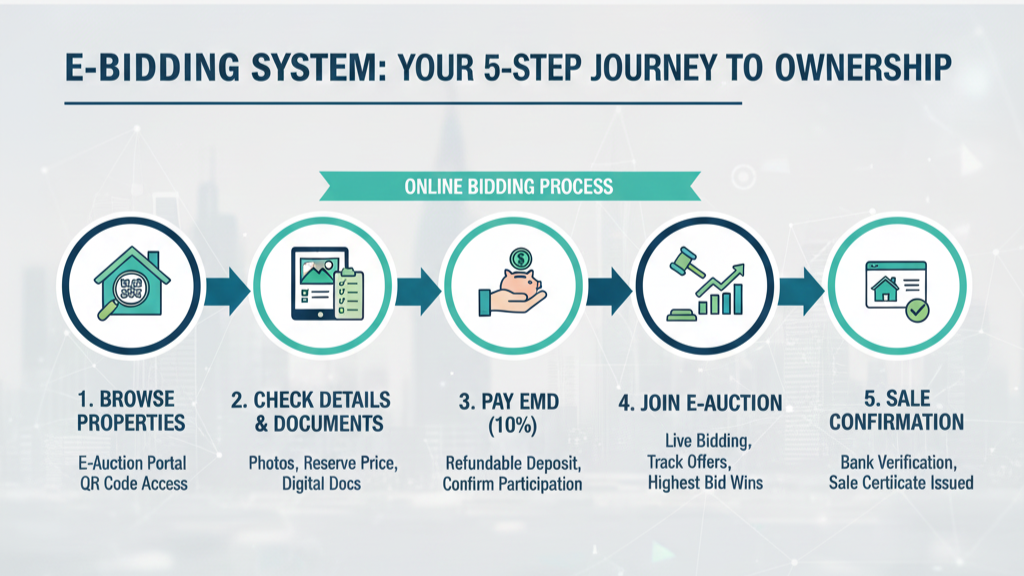
Online bidding has made the process straightforward. Most banks follow a similar simple structure:
Step 1: Browse properties
Buyers visit the bank’s official e-auction portal and explore thousands of listed residential and commercial properties. QR codes on ads and social media campaigns take users directly to property pages.
Step 2: Check details and documents
Listings include property photos, inspection schedules, reserve price, loan details, and auction terms. Banks now upload all necessary documents digitally, allowing buyers to inspect before visiting physically.
Step 3: Pay EMD (Earnest Money Deposit)
A small refundable amount, usually 10% of reserve price, is paid online to confirm participation.
Step 4: Join e-auction
On auction day, buyers log in, track bids in real time, and place offers. The highest eligible bidder wins.
Step 5: Sale confirmation
Once the bank verifies the bid, a sale certificate is issued.
The entire process is monitored to ensure transparency and prevent manipulation. Digital audit trails minimise disputes and encourage confidence among first-time participants.
RBI & DFS Push for Modernisation
The movement toward digitising auctions aligns with broader regulatory reforms.
– RBI has encouraged banks to adopt safer digital channels, improve recovery processes, and reduce manual intervention.
– DFS has promoted uniform standards for asset listings, faster approvals, and improved buyer communication.
These reforms aim to create a nationwide ecosystem where auction participation is seamless and safe, regardless of a buyer’s location. Alongside this, several banks are running Bank X-style awareness campaigns on social platforms to educate homebuyers about opportunities available through auctions.
The effect is visible. Participation has increased significantly in metro and Tier-2 markets, and even small-town buyers are showing interest in secure digital auctions.
Why Safety Has Become a Priority
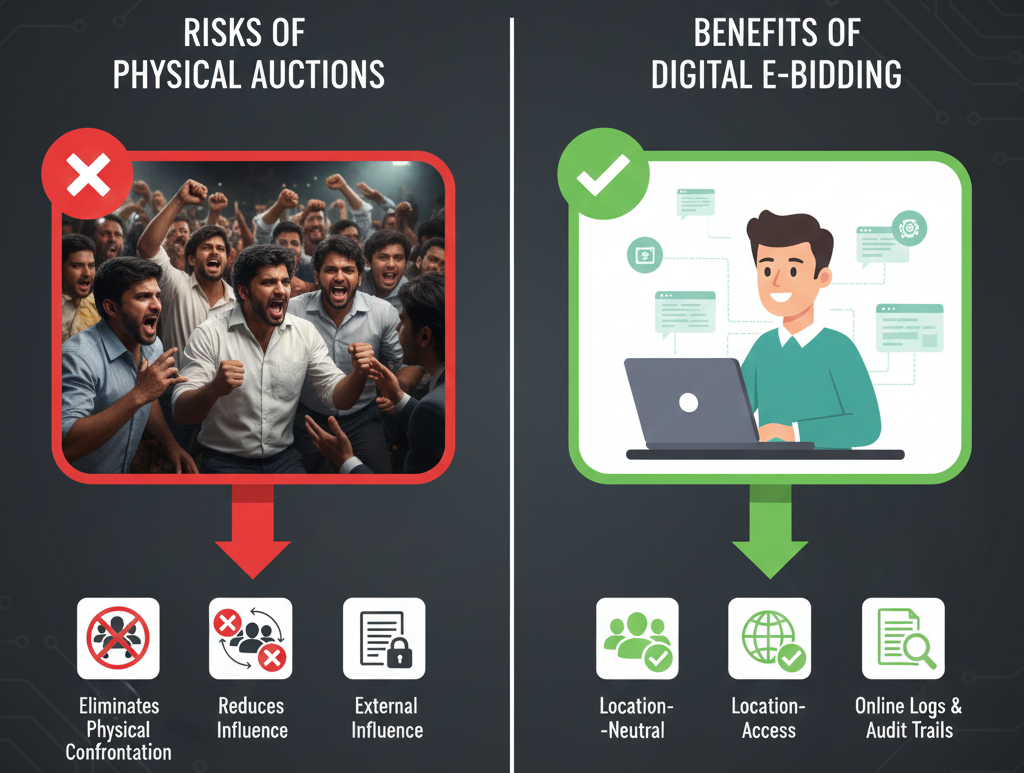
In recent years, isolated incidents of auction–related violence and disputes—particularly during physical auctions—triggered public debate. Social-media discussions spotlighted the need for secure digital procedures that protect both bidders and bank officials.
Digital-only auctions answer this concern by:
– Eliminating physical confrontation
– Increasing transparency through online logs
– Making participation location-neutral
– Reducing influence by external groups
This need for a safer, tamper-free system is one of the major reasons agencies have accelerated the shift toward e-bidding.
The Rise of QR-Code–Driven Auction Discovery
Banks like IOB and Canara have introduced QR codes across newspaper ads, branch posters, and social media. Scanning these codes instantly displays:
– Property images
– Inspection timing
– Reserve price
– Documentation list
– Auction date and portal link
This feature has lowered the entry barrier, especially for first-time buyers who previously found auction paperwork overwhelming.
With thousands of auction properties available at any time, discovery has become easier than ever.
Who Should Consider Auction Properties?
Auction properties are a strong fit for:
– First-time buyers seeking affordability
– Investors looking for below-market opportunities
– Buyers comfortable with quick decisions
– Buyers who want verified title clarity
– People open to light repair or refurbishment work
Many auction properties are ready-to-move or near-ready, making them a good alternative to under-construction risks.
FAQ Section
1. Are auction properties safe to buy?
Yes. Banks auction only when they have legal charge, making titles clearer than many private distressed sales.
2. Is e-bidding complicated?
No. Banks have simplified the system with online portals, QR codes, and digital documentation.
3. Do I need legal help?
While banks verify documents, independent legal review is still recommended for full clarity.
4. Can I inspect the property before bidding?
Yes. Banks provide inspection schedules, often listed directly in the QR-linked details.
5. What makes auction properties affordable?
Reserve prices are usually lower than market value because banks target recovery, not profit.
Conclusion

Digital auctions are opening new doors for Indian homebuyers. With transparent e-bidding systems, QR-based property discovery, and regulatory support from RBI and DFS, auction properties are becoming mainstream options for those seeking affordability and clarity. As more banks modernise their platforms, the experience will continue improving—offering a secure, convenient pathway to homeownership.
Let’s Join Together to Bring Change to the World of Real Estate.
Relai – For right home.
Thinking about your next home?
relai scores every project on data, not paid placements, and it's free for buyers.